
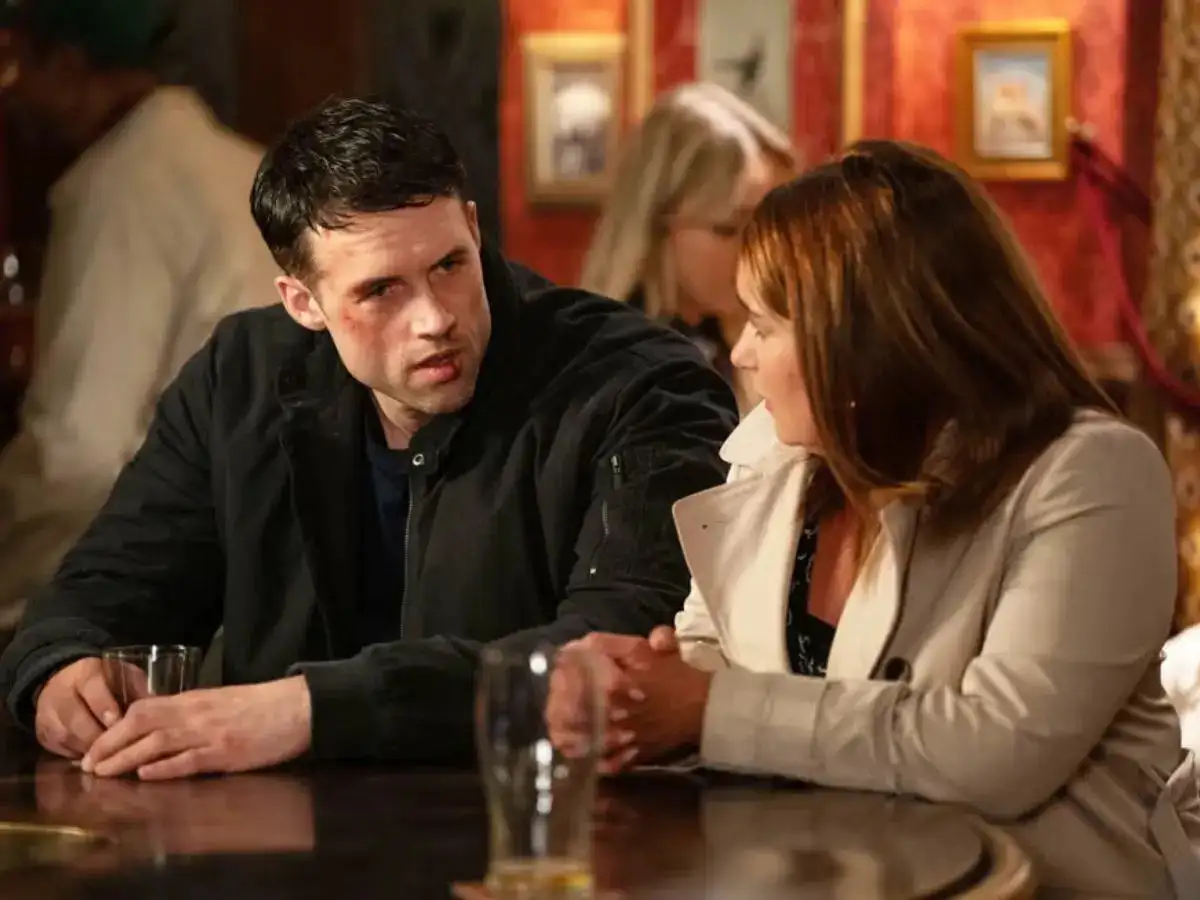
EastEnders- Mark finds out his debt has doubled because of Grant & angrily confronts him
The Mitchell family has once again been plunged into a state of total, catastrophic destabilization, as the toxic collision between paternal interference and underworld ruthlessness forces Mark into a harrowing, life-or-death predicament that neither he nor his warring father and uncle can resolve without devastating consequences. The atmosphere within the home is suffocating, thick with the scent of betrayal and the sharp, metallic tang of fear, as Mark grapples with the cold, hard realization that his debt—a burden that once felt manageable—has been doubled to a staggering 200,000 pounds by Russell Delaney, a man whose sadistic pleasure in watching the Mitchell dynasty crumble is now the driving force of the conflict. This is not merely a financial crisis; it is a profound, existential reckoning, as the arrogance of Grant and Phil, who both genuinely believe they are the architects of a salvation that is rapidly slipping through their fingers, is dismantled by the realization that their interference has only poured gasoline on a fire that threatens to consume everyone they love. Every exchange is a masterclass in suppressed rage, with Mark caught in the agonizing crossfire of two men whose inability to act in concert is the very catalyst that has turned a simple negotiation into a death warrant, forcing the audience to witness the heartbreaking disintegration of the myth of Mitchell invincibility as the reality of their helplessness is laid bare. The sheer, unadulterated coldness of Delaney’s demands—a deadline set for the end of the next week—turns the living room into a claustrophobic prison, where the ticking of the clock is matched only by the rhythmic, agonizing pulse of Mark’s own panic as he realizes that the “sorting” of his problems by the men he trusted has effectively sealed his doom.

The revelation that the escalation of the debt is tied directly to Grant’s disastrous, pride-fueled confrontation with Delaney serves as a brutal, searing indictment of a father who consistently confuses aggression with protection and intimidation with strategy. Grant’s belief that his “history” with Delaney—a dark, shared tapestry of old grudges and past grievances—would allow him to navigate the negotiation was a catastrophic miscalculation, one that transformed a business dispute into a personal vendetta and directly resulted in the doubling of Mark’s burden. Watching Mark confront his father, his voice trembling with the realization that his life is being gambled away on the vanity of men who refuse to admit they are out of their depth, is a scene of profound emotional violence, stripping away the performative layers of paternal authority to reveal the terrified, fragile figure of a son who is finally seeing his hero for the broken, desperate man he actually is. The tension is compounded by the shadow of Grant’s visit to Victoria, a maneuver that only serves to validate Delaney’s twisted, sadistic leverage, proving that for men like Delaney, the suffering of the Mitchells is not just a goal, but a delicious, perverse form of entertainment that they have invited into their own house through their refusal to be anything other than confrontational.
Phil Mitchell, whose desperate attempts to “sort” the situation through his own channels are now being aggressively undermined by Grant’s intervention, finds himself in the humiliating position of a secondary fixer whose authority has been completely eclipsed by the catastrophic fallout of his brother’s ego. The friction between the brothers—a lifelong, gladiatorial struggle for control over the family narrative—has reached a point of irreparable, systemic rot, where even in the face of a direct threat to Mark’s life, they remain more focused on undermining one another than on securing a solution. Phil’s claim that he was selling the bar in Portugal to raise the funds, a sacrifice intended to buy Mark’s survival, is dismissed by Grant with the cold, lacerating declaration that he is “nothing” and that his involvement is an unwelcome, ineffective intrusion, signaling the complete collapse of their unity. This is the tragic, age-old cycle of the Mitchells: the inability to form a unified front, even when the alternative is the total annihilation of the future, driven by a pathological need to be the one who saves the day, regardless of how many lives are shattered in the process. The irony is that in their desperate race to be the savior, they have both become the primary architects of the impending tragedy, creating a vacuum of power that Delaney is expertly exploiting to ensure that the Mitchells are the ones who ultimately destroy themselves.
The impact of this collapse on Mark is particularly devastating, as he is forced to witness the total, pathetic erasure of his father’s legend, realizing that the man he looked up to is incapable of acknowledging his own catastrophic failures. Grant’s dismissive, aggressive posturing in the face of his son’s terror is a moment of profound, narrative cruelty, an act of psychological abandonment that leaves Mark standing in the ruins of his family’s reputation, realizing that the “sorting” of his life is nothing more than a series of empty, violent gestures. When he turns to Grant to demand why he is doing this, the response is not one of remorse or an admission of guilt, but a doubling down on the very arrogance that triggered the doubling of the debt, confirming that for Grant, the survival of his son is inextricably linked to the survival of his own, damaged pride. The scene is a masterclass in the breakdown of the father-son bond, where the silence that follows the final, stinging insult is far louder than the shouting that preceded it, signaling the absolute, final end of the illusion that they are protected by the strength of the Mitchell name. 
Ultimately, we are bearing witness to the final, slow-motion disintegration of a family that has built its legacy on the premise that they are untouchable, only to discover that their greatest enemy has always been the pride, the secrets, and the unresolved history that they keep locked in their own walls. The doubling of the debt is a physical manifestation of the rot that has permeated every corner of their lives, ensuring that no amount of selling bars in Portugal or making deals with ghosts from the past can truly cleanse their existence of the malice that has been allowed to take root. As the deadline for the 200,000 pounds looms and the final, biting words of contempt are traded between Grant and Mark, the audience is left with the chilling, undeniable certainty that the tragedy has already arrived, hidden behind the mask of their desperate, everyday squabbles. The stage is set for a climax of devastating proportions, and as they prepare to face the consequences of their pride, the viewers are left waiting with bated breath to see if they can ever truly reconcile their ambitions with the cold, hard reality of their failure, or if they are doomed to repeat their cycle of destruction until there is nothing left to salvage. Their lives, much like the deals they break and the ties they sever, are collapsing in real-time, and the realization that they can no longer keep the engines of their myth running is the most profound, and most necessary, truth they are about to be forced to face, leaving us to watch in breathless, horrified anticipation as the illusion of their stability is finally, and permanently, stripped away.