
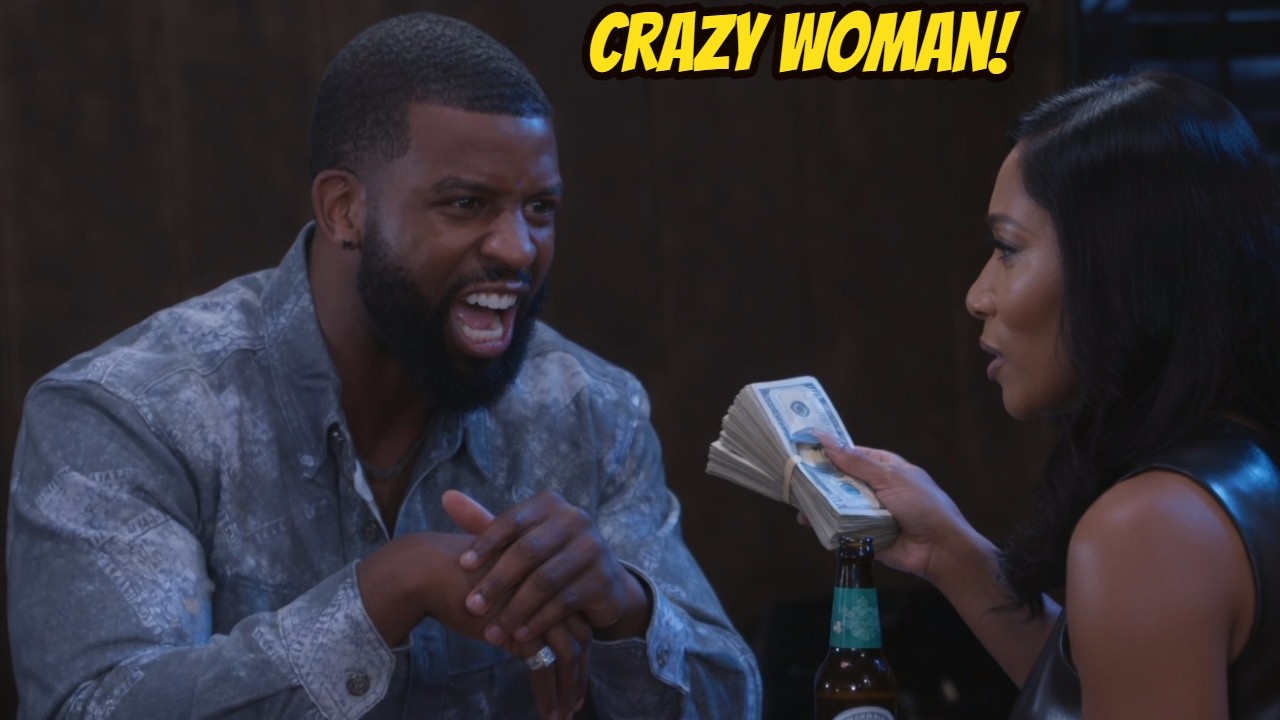
Randy Betrayed Joey For Leslie’s Blood Money | Beyond The Gates Spoilers
Fairmont Crest has officially descended into a chaotic maelstrom in Beyond The Gates, and the latest storyline involving Leslie Thomas, Randy, Eva, and Joey is proving to be one of the most intricate and emotionally charged arcs of the season. Beneath the surface of the hospital scandal and the plasma theft, the series is exploring power, fear, and the subtle ways manipulation and loyalty collide under pressure.
Leslie’s Panic Reveals Hidden Weakness
At the heart of this crisis is Leslie Thomas, whose trademark arrogance and control have been shaken to their core. For someone who has always positioned herself as the smartest person in the room, the plasma scandal has exposed a shocking vulnerability. The theft has damaged public trust, destabilized two major hospitals, and threatened to unravel the delicate social order of Fairmont Crest’s elite.
Normally, a figure like Leslie would rely on financial leverage and influence to maintain control. But her panic-driven attempts to secure Joey’s continued support reveal a surprising lack of awareness. She believes Joey might withdraw his funding in the wake of the scandal—but that assumption misunderstands Joey’s strategic mindset.
Investors flee when a situation becomes unstable, but criminally minded operators like Joey perceive opportunity in chaos. The scandal didn’t weaken his interest; it amplified his leverage. Leslie’s frantic attempts to bribe, beg, and manipulate Randy for information are not protective measures—they are self-sabotage. Out of fear, she’s willingly exposing the vulnerabilities in her own empire.
Randy’s Stand Changes The Power Dynamic

Randy, initially appearing as a minor player, emerges as a pivotal figure in this storyline. Leslie approaches him, assuming that her wealth and authority will compel him to cooperate. But Randy refuses—not from morality, but practicality. He knows Joey’s priorities, and he recognizes that Leslie’s erratic panic is no longer an asset.
The scene where Randy shuts down Leslie is telling: he sees her as predictable, chaotic, and dangerous. He is exhausted by her manipulation, yet his refusal carries subtle, potent consequences. Suddenly, Leslie confronts the harsh truth: her influence is no longer absolute. Fear only works when others perceive you as powerful, and Randy’s defiance exposes her social irrelevance.
This moment cracks Leslie’s confidence in a way the audience rarely sees. Her desperation, once masked by manipulation, is now fully visible. The humiliation is psychological—her ego is bruised, but her drive for control ensures she recalibrates quickly, seeking another path to achieve her goals.
Eva’s Role Introduces Emotional Complexity
Just when Leslie appears cornered, Eva enters the story, shifting the emotional stakes entirely. Unlike Randy, Eva is motivated not by pragmatism, but by conscience. She helps Leslie not because she condones her past actions, but because she recognizes the broader stakes: the hospital, the staff, and the ongoing fallout from the plasma scandal.
Eva’s involvement introduces a fascinating contrast. Leslie thrives on fear, control, and manipulation; Eva operates from empathy, loyalty, and foresight. One is reactive, attempting to manage instability; the other is proactive, trying to stabilize it. The juxtaposition amplifies the tension and provides a fresh lens through which the audience can understand the unfolding events.
Ted’s subtle guidance to Eva further reinforces this theme. Instead of issuing orders or imposing guilt, Ted respects Eva’s autonomy, asking her what she wants to do. It’s a nuanced moment of mature leadership in a storyline dominated by selfishness and panic, highlighting the difference between true influence and coercion.
Emotional Mirrors: Leslie vs Eva
In many ways, Leslie and Eva are mirrors. Both women attempt to control chaos, but their motivations diverge sharply. Leslie acts out of fear of losing power, financial dominance, and social standing. Eva acts from a fear of losing people and the integrity of the hospital. This contrast is at the core of the arc’s brilliance: it shows how identical strategies—overworking, influencing, intervening—can stem from radically different emotional places.
Joey, meanwhile, may understand both women completely. If he has illicit interests tied to the hospital, the current turmoil only benefits him. Public confusion, fractured alliances, and desperate actors like Leslie create openings he can exploit. His silence and calculated presence make him the most dangerous character in the room: calm, patient, and strategically omnipresent.
The Implications For Joey And Leslie

As the narrative unfolds, the tension between Leslie and Joey reaches a boiling point. Leslie believes she is controlling the crisis, but Joey’s composure demonstrates the futility of her panic. He was never her partner—only a calculated observer, assessing her behavior and ensuring his interests remain protected. The eventual realization that she has been outmaneuvered threatens to shatter her self-perception entirely.
This dynamic exemplifies Beyond The Gates’ mastery of psychological storytelling. It’s not about who will win in a physical or legal sense; it’s about who can maintain influence under duress, who can manipulate or stabilize emotional currents, and who ultimately collapses when control slips away.
Narrative Themes: Control, Dependency, And Survival
Beneath the drama of the plasma scandal, the hospital, and the elite’s social maneuvering, the storyline examines deeper questions: How do people react when the structures they depend on fail? How do emotional loyalty, dependency, and fear interact in a high-stakes environment? Leslie’s desperation, Randy’s practicality, Eva’s empathy, and Joey’s calculated calm all converge to explore these themes with precision.
Each character is revealing who they truly are under pressure. Leslie’s overconfidence and frantic decisions expose vulnerabilities. Randy’s refusal highlights limits of loyalty. Eva’s compassion demonstrates the cost of emotional investment. And Joey’s quiet mastery underscores the power of preparation and observation in chaotic systems.
Conclusion: Stakes Beyond The Surface
In this latest arc of Beyond The Gates, the interplay between Leslie, Randy, Eva, and Joey elevates the series from conventional soap drama to a layered exploration of control, fear, and survival. The hospital and plasma scandal are not just plot devices—they are crucibles in which true character is revealed.
Leslie’s miscalculations, Randy’s moral calculus, Eva’s loyalty, and Joey’s calculated silence promise to reshape alliances, escalate tensions, and redefine the power structure in Fairmont Crest. As viewers, we are left on the edge of our seats, anticipating the moment when Leslie realizes she has been outplayed, and questioning who will ultimately survive the collision of ambition, fear, and morality.
This storyline is a masterclass in tension, emotional complexity, and high-stakes soap drama—one that will have fans discussing strategy, loyalty, and betrayal long after the credits roll.