
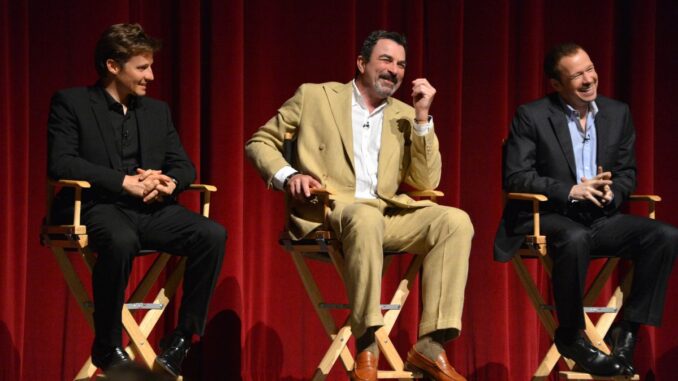
The Unspoken Truth (2026): What CBS Never Allowed The Cast Of ‘Blue Bloods’ To Say On Camera
For over a decade, the Reagan family of “Blue Bloods” has graced our screens, embodying a steadfast commitment to justice, family values, and the intricate world of law enforcement in New York City. Fans have grown to love Frank, Danny, Erin, Jamie, and the entire ensemble, feeling a deep connection to their weekly dinner table discussions and high-stakes police work. However, beneath the polished veneer of prime-time television often lies a complex web of creative control, network directives, and the unspoken desires of actors and writers. A groundbreaking revelation is rumored to be on the horizon in 2026, promising to unveil
The Unspoken Truth (2026): What CBS Never Allowed The Cast Of ‘Blue Bloods’ To Say On Camera md02
. This anticipated exposé will reportedly pull back the curtain on the behind-the-scenes dynamics, revealing the narratives, opinions, and character depths that network executives at CBS consciously decided to suppress or alter, shaping the show into the beloved, yet perhaps sanitized, version we know today.
The Iron Grip of Network Control: Shaping the Reagan Narrative
Long-running and highly successful shows like “Blue Bloods” are often subject to intense scrutiny and creative direction from their parent networks. For CBS, “Blue Bloods” represented a significant investment and a cornerstone of its Friday night lineup, appealing to a broad demographic with its blend of police procedural drama and family values. This success, however, often comes at the cost of creative freedom. Network executives, driven by ratings, advertiser interests, and brand image, frequently impose restrictions on storylines, character development, and even dialogue.
The alleged revelations in “The Unspoken Truth (2026)” are expected to detail how CBS maintained a tight grip on the Reagan narrative. This could involve:
- Directives to avoid overly controversial political stances, particularly concerning policing reforms or specific social justice movements.
- Insistence on maintaining a generally optimistic or morally unambiguous tone, even when characters faced complex ethical dilemmas.
- Censorship of character storylines that might have explored more unconventional personal lives, struggles with faith, or dissenting views within the tightly knit Reagan family structure.
Such interventions, while perhaps ensuring the show’s longevity and broad appeal, inevitably meant that certain facets of the characters and their world remained unexplored, leaving fans with only a partial picture of what the creators and actors truly envisioned.
Character Depths Unexplored: Beyond the Badge and the Dinner Table
One of the most fascinating aspects of
The Unspoken Truth (2026): What CBS Never Allowed The Cast Of ‘Blue Bloods’ To Say On Camera md02
will undoubtedly be the insights into the character dimensions that the actors themselves wished to portray, but were reportedly disallowed. For seasoned performers like Tom Selleck (Frank Reagan), Donnie Wahlberg (Danny Reagan), Bridget Moynahan (Erin Reagan), and Will Estes (Jamie Reagan), their characters became extensions of themselves over the years. It’s natural for actors to seek deeper, more nuanced portrayals, pushing the boundaries of their roles.
Imagine a Frank Reagan grappling more openly with the moral ambiguities of his position, expressing profound doubts about the system he upholds, or an Erin Reagan exploring a more radical approach to justice, clashing fundamentally with her family’s traditional views. Perhaps Danny Reagan’s personal demons ran deeper than what was shown, or Jamie Reagan considered leaving the force for a path less conventional. The documentary is expected to reveal:
- Specific instances where actors proposed storylines or character arcs that were rejected by the network for being “too dark,” “too political,” or “not fitting the brand.”
- The frustration of performers who felt their characters were being kept in a narrative box, preventing them from evolving in more complex and realistic ways.
- How personal beliefs or experiences of the actors themselves were sometimes at odds with the messages their characters were mandated to convey.
These unexplored depths could offer a profound re-evaluation of the characters we thought we knew so well, revealing the human yearning for authenticity behind the roles.
Navigating Real-World Controversies: The Tightrope Walk for CBS

“Blue Bloods” has consistently tackled contemporary issues related to policing, justice, and societal challenges. However, the nature of network television, especially for a show with a broad, loyal audience, often necessitates a delicate balancing act when addressing sensitive topics. The upcoming revelations are anticipated to shed light on how CBS navigated (or avoided) real-world controversies, particularly concerning law enforcement.
The period during which “Blue Bloods” aired saw significant public discourse around police reform, accountability, and the role of law enforcement in society. It’s highly probable that the network imposed guidelines to ensure the show remained generally palatable and non-polarizing. This could mean:
- Censorship of explicit discussions about systemic racism within law enforcement, instead focusing on individual bad actors or “rotten apples.”
- Restrictions on dialogue that might have openly criticized police tactics or advocated for radical changes to the justice system.
- A deliberate emphasis on the heroism and self-sacrifice of police officers, potentially downplaying the complexities and criticisms they faced in real life.
The “Unspoken Truth” promises to expose the directives that kept the show on a perceived “safe” path, preventing its characters from fully engaging with the more challenging and uncomfortable aspects of their profession and the society they served.
The Actors’ Voices: Suppressed Opinions and Personal Beliefs

Beyond the characters, the actors themselves are individuals with their own beliefs, experiences, and perspectives. In a long-running series, the line between actor and character can blur, and networks often exert influence over how performers present themselves publicly and what they say in interviews, especially concerning the show’s themes. “The Unspoken Truth (2026)” is expected to provide a platform for the cast to finally share the opinions and insights they were previously compelled to keep private.
This section of the exposé could reveal:
- Instances where actors were advised or instructed to avoid certain topics in interviews or on social media to maintain the show’s image.
- The personal struggles of actors who felt their own values or interpretations of justice diverged from what their characters were allowed to express.
- Anecdotes about on-set discussions where cast members voiced concerns about certain storylines or dialogues, only to be overruled by executive decisions.
Understanding the personal impact of these restrictions on the actors will add another layer of depth to our appreciation of their performances, highlighting the professional compromises made in the pursuit of a successful television series.
The prospect of “The Unspoken Truth (2026)” is more than just a tell-all; it’s an opportunity to gain a deeper, more authentic understanding of a show that has become a cultural touchstone. Fans who have invested years in the Reagan family will finally get to hear the voices that were muted, explore the paths that were not taken, and confront the realities of network television’s powerful influence. This future revelation promises to be a pivotal moment for “Blue Bloods” aficionados, offering a new lens through which to view every past episode.
As we eagerly await the revelations of
The Unspoken Truth (2026): What CBS Never Allowed The Cast Of ‘Blue Bloods’ To Say On Camera md02
, it’s clear that the upcoming exposé will not just be a collection of anecdotes, but a profound commentary on the nature of storytelling, censorship, and the delicate balance between creative vision and corporate control in the entertainment industry. Prepare to re-evaluate everything you thought you knew about the Reagans and the forces that shaped their on-screen legacy.